 Horme
HormeProgress happens between sessions
Training is the signal; recovery is the response. Horme measures the second one using what you already wear and what you tell it, and adjusts the plan when things don't add up.
- 4native watch apps
- 6factors in the injury score
- 2reliable signals minimum to score
- 5types it can write, if authorised
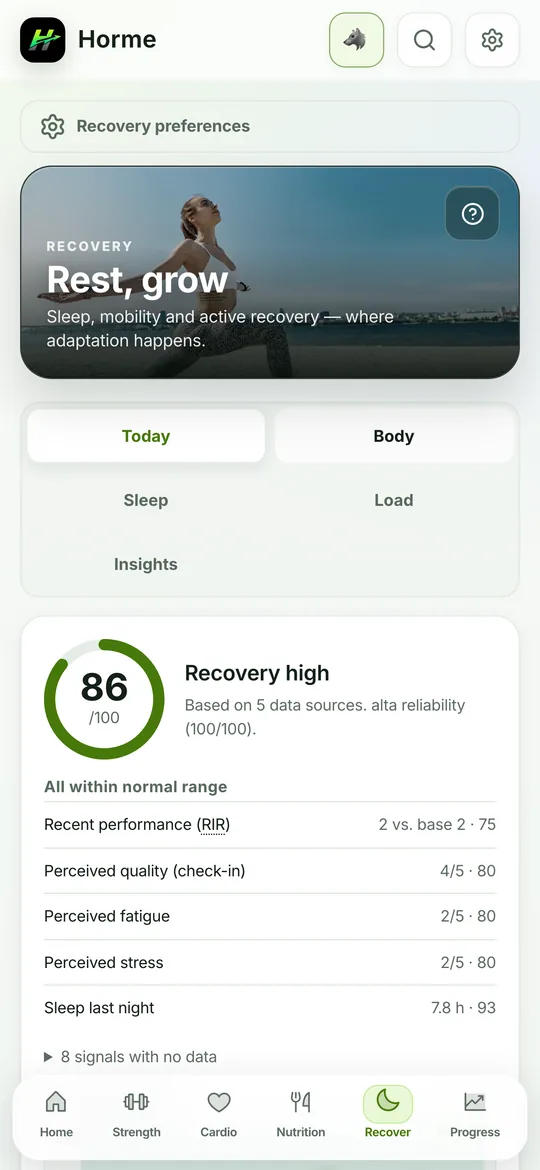
A number that explains itself
Sleep, perceived fatigue, stress, resting heart rate and variability. It is not magic: it is a weighted average you can take apart.
Sleep counted on the right day
Last night's hours weigh on today, not yesterday. Sounds obvious, and it is where half of all health integrations get it wrong.
Resting HR and variability
Compared against your own baseline, not a population table. Your 48 might be excellent or worrying depending on where you came from.
Injury risk
Six factors — acute versus chronic load, imbalances, sleep, history and more — that flag when you are on slippery ground.
What it does NOT do
It won't hand you a recovery percentage when it only has one signal. Aggregate scores require at least two reliable signals; when they aren't there, you see what's missing instead of an invented number that looks scientific because it has decimals.A native app on all four platforms
Not a forwarded notification: the day's routine, set logging, the heart-rate target and the day at a glance — water, nutrition and streak included — on your wrist.
One decision, one place
The four watches don't re-run the phone's calculations. The phone decides whether you're ready to train, what your heart-rate target is and what's on today, and the watch displays it. That makes it impossible for watch and app to tell you different things — which is exactly what happens whenever both ends "think" independently.There is one exception, and only one: the HarmonyOS watch can start and save a workout with no phone involved, from a catalogue of its own. It still decides nothing — it doesn't read your history or propose loads — it just stops needing the phone in order to log.
If it writes to Health, Horme reads it
Fitbit, Zepp, Amazfit, Whoop, Oura, Polar, Suunto and the rest: no one-by-one integrations needed. They all write to Apple Health or Health Connect, and that's where Horme reads.
Steps, active calories, heart rate, sleep, weight, SpO₂ and VO₂ max. And if your watch doesn't report VO₂ max, Horme estimates it by formula from what it does have.
Quality travels with every data point
Before moving your baseline, Horme normalises units, rejects physically impossible values, avoids double-counting and chooses one coherent source per night. The summary retains how many samples were used, how many were rejected and where they came from.
Wrist SpO₂ and skin temperature are treated as consumer-device trends, not clinical pulse oximetry or core temperature. More samples do not turn a consumer sensor into medical instrumentation.
Permissions, in plain language
| What | What for | Direction |
|---|---|---|
| Steps and active calories | Adjust your calorie target to the day's real expenditure. | Read-only |
| Sleep | Feed the recovery index and warn you if you build up a deficit. | Read-only |
| Heart rate and variability | Your own baseline, training zones and fatigue detection. | Read; optional writing of your own cardio average |
| Weight and body composition | Weight trend and level calculation; you can also enter it by hand. | Read; optional writing of your own entries |
It works without a watch too
With no wearable, the index runs on your daily check-in: how you slept, how tired you are and how stress is going. Three taps. It's less precise than a sensor, and the app says so instead of pretending otherwise.
- Check-in reminder if you have gone days without logging sleep
- Menstrual cycle as a planning factor, if you choose to track it
- Streaks and habits with a freeze: one bad day does not erase two months
- Local reminders with quiet hours, no server involved
You adapt while you sleep
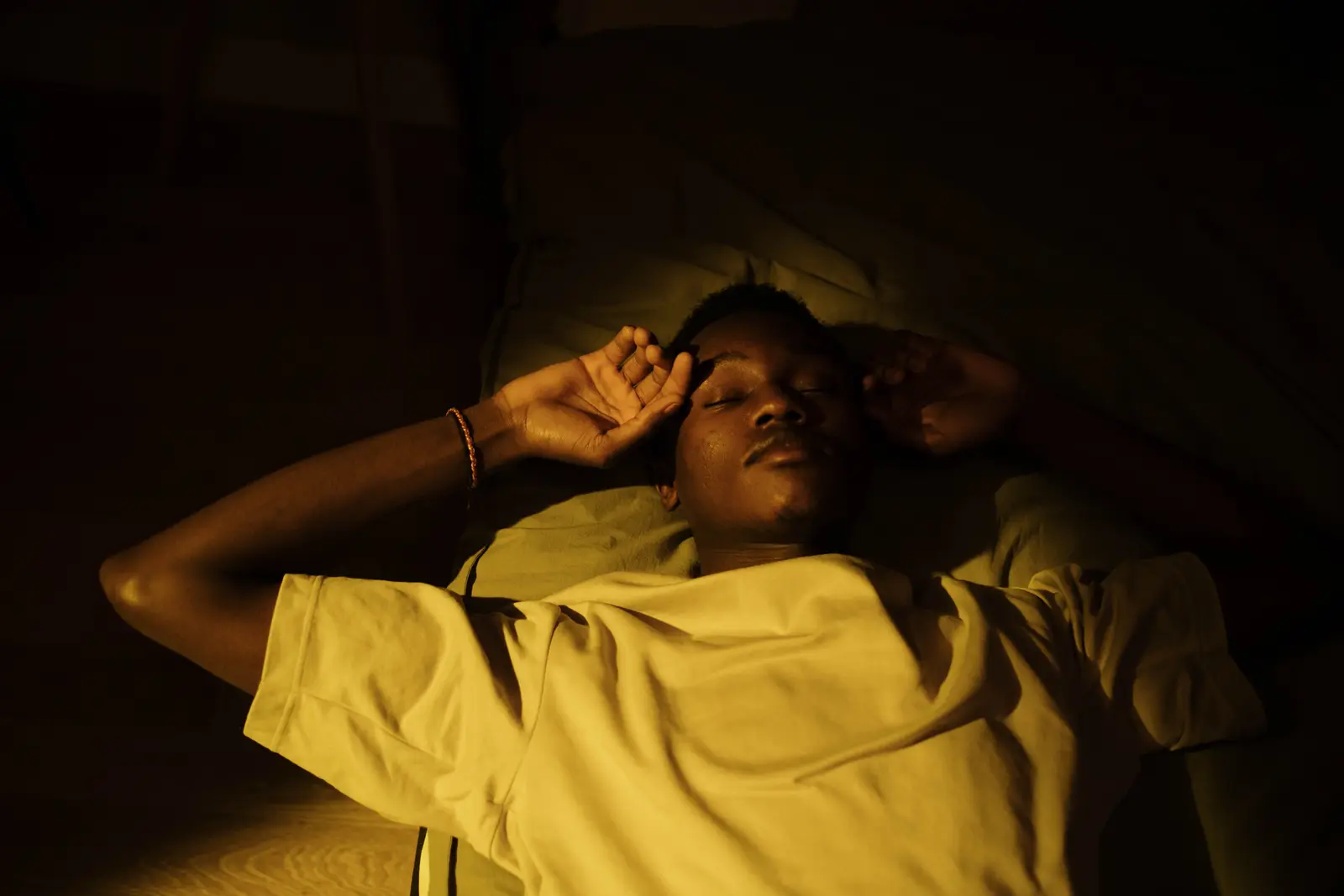
Training is the stimulus. If recovery does not arrive, all you accumulate is fatigue — and the app tells you before an injury does.
An easier week is not wasted time
Deload weeks are inside the mesocycle from day one, not improvised once you cannot take any more. It is the part of the plan almost nobody schedules and the first one you miss when it is not there.
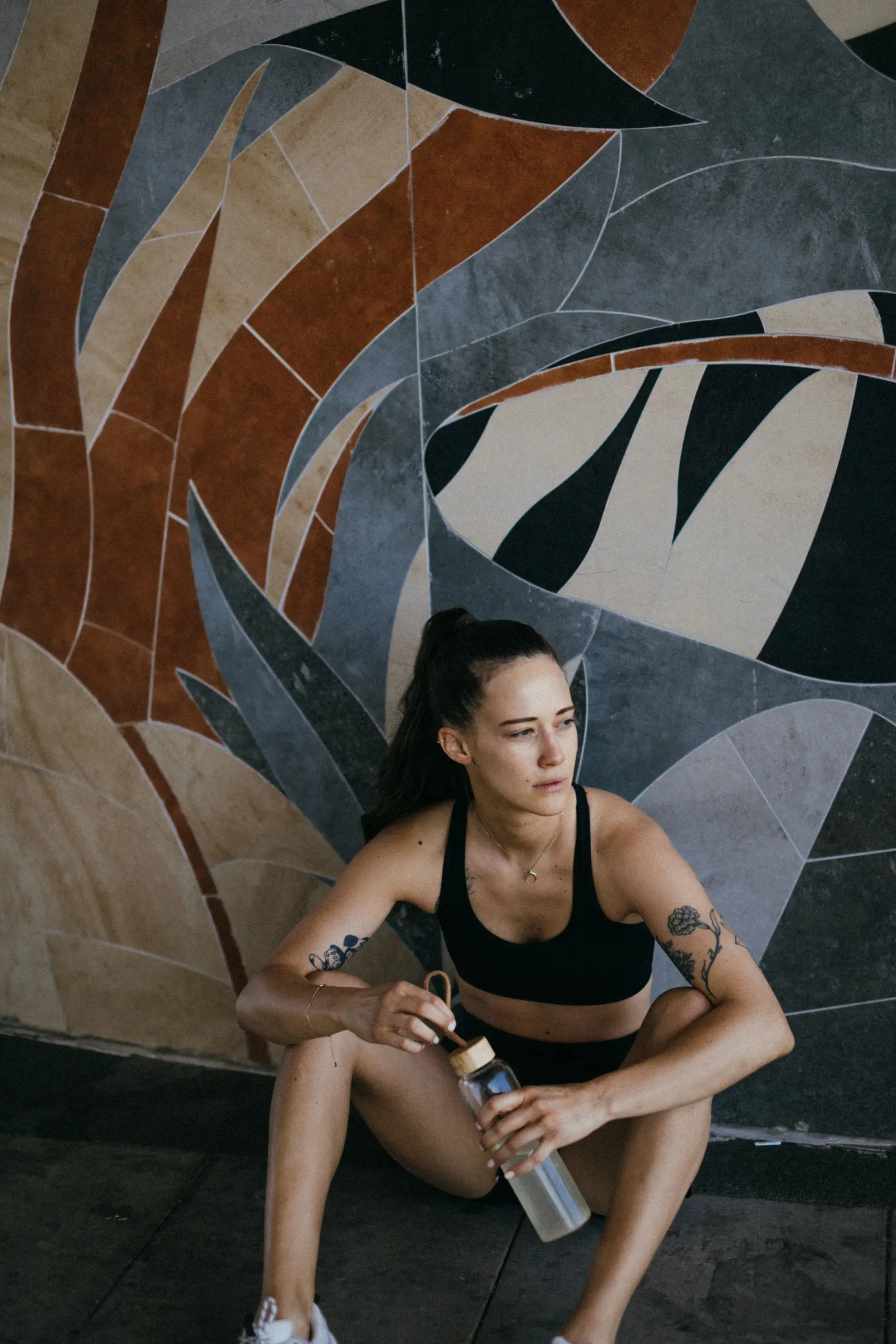

Training is the stimulus.
Adapting happens later
If you have not recovered, today's plan knows it and drops the volume. That is what separates a sustainable progression from stacking fatigue until something breaks.
Connect your watch in a minute
Grant the read permissions and Horme starts using your data that very night.
Free. No account required. Works offline from the first launch.