 Horme
HormeA plan that corrects itself
Horme builds your routine from your goal, your level, the days you can train, the equipment you have and the injuries you carry. Then it adjusts it using what you actually log, not what was written on the plan.
- 616exercises in the library
- 616with movement animation
- 16muscle groups tracked separately
- 13routine structures, from 2 to 6 days
Effective volume: the count almost nobody does
Counting sets is easy. The problem is that a set taken to the limit and a set you racked eight reps shy of failure do not produce the same stimulus — and adding them up as equals is why a lot of people train a lot and progress little.
| Reps in reserve (RIR) | Counts as | Why |
|---|---|---|
| 0 – 4 (close to failure) | 1 full set | You recruit nearly all available fibres: this is where adaptation happens. |
| 5 – 6 | ½ set | There is stimulus, but partial. Useful to accumulate without wrecking yourself. |
| 7 or more | ¼ set | That is technique and warm-up more than stimulus. It counts, barely. |
Weeks that climb and weeks that back off
A programme that adds load every week until you break is not a programme, it is a countdown.
Mesocycle
Blocks of four to six weeks with one clear goal: accumulate volume, intensify, or maintain.
Accumulation
Volume climbs progressively for as long as fatigue allows, and the app watches both.
Deload
A lower-volume week scheduled before you need it. That is when the body cashes in what you built.
Logging can't steal your session
Between sets you don't want to fight a form. Horme's logger bumps the load up or down with one tap, remembers what you did last time and starts the rest timer on its own.
Focus Mode strips the screen down to what matters: the exercise, the set and the timer. And if you'd rather not touch your phone with chalk on your hands, you can dictate the set or log it from your watch.
- Personal records detected automatically
- Per-exercise rest timer
- Swap an exercise without losing the plan
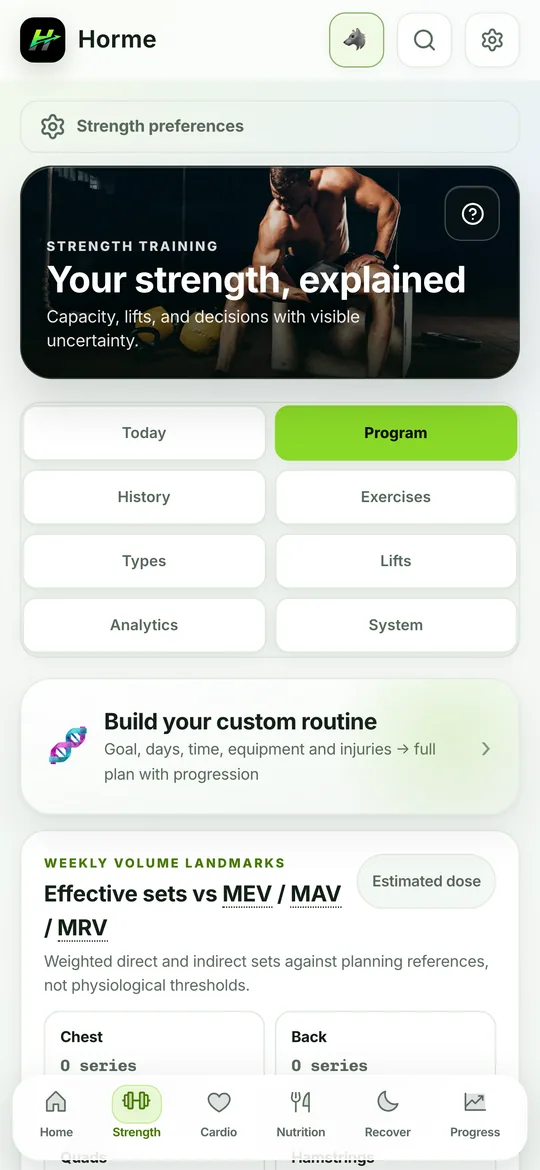
616 exercises that teach you how
Every entry ships with the movement animation, primary and secondary muscles, execution cues, common mistakes and substitutes if you lack the equipment.
They also carry a stimulus-to-fatigue note: how much that exercise gives you compared to what it costs to recover from it. That's the difference between choosing well and choosing whatever is first on the list.
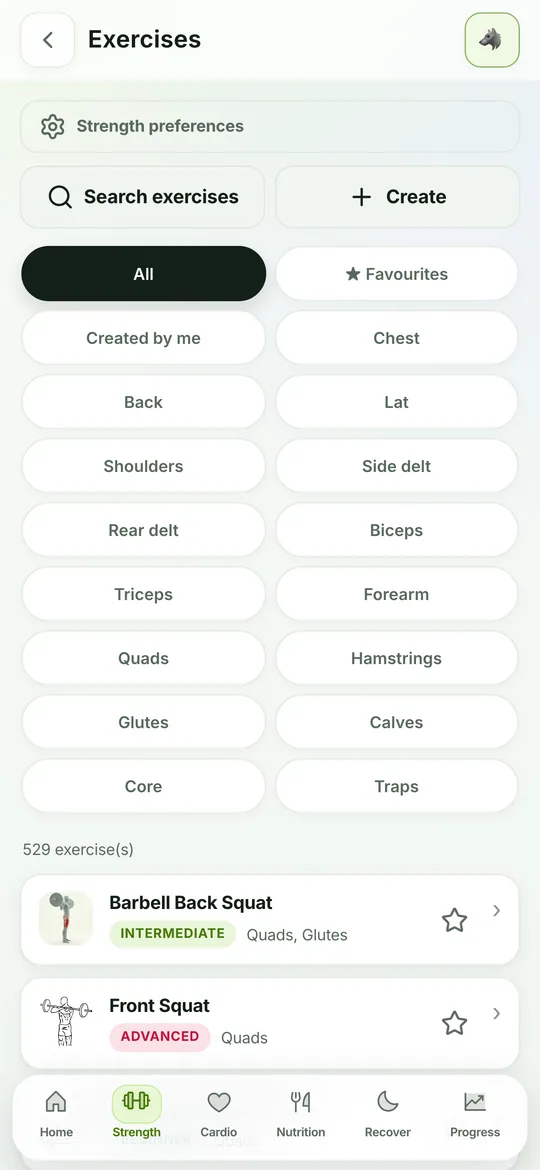
The routine adapts to the day you actually had
Adapt today
Only 30 minutes? At home with two dumbbells? One tap and today's session — only today's — is rebuilt around what you've got. Tomorrow the plan returns.
Missing a day does not wreck the week
The routine is anchored to weekdays. Skip Tuesday and Horme rebalances what's left instead of dragging the backlog into December.
Injuries that are respected
Flag a sensitive area and the exercises that load it disappear from your routines, replaced by alternatives with the same movement pattern.
Intensity techniques, when they fit
Supersets, drop sets, rest-pause and mechanical sets: offered according to your level and executed step by step, not just written on the plan.
A beginner does not need a drop set. They need technique and consistency.
Audio mode: the session is read out to you
With your hands on the bar you do not read a screen. In audio mode the app calls out the set, narrates the rest and counts you down on its own.
It tells you what is next
"Bench press, third set, eight reps at RIR 2." It tells you when rest is over, and when you have gone over. Nothing to unlock.
And it listens
"Done", "eighty kilos, eight reps", "skip the rest". The set is logged without touching your phone, in Spanish or English.
Recognition happens on the device: your voice does not leave it.
Tempo with a metronome
If the set prescribes a tempo — three seconds down, one at the top — you hear it. A tempo written on paper does not get followed; one you can hear does.
An analyser that audits your whole routine
It does not matter whether the app built it, whether it is a template or whether you put it together yourself: the analyser reviews it across eight dimensions — volume per muscle, movement-pattern balance, frequency, intensity, exercise order, coverage, recovery and progression — and scores it.
The score is not the point; the findings are: each one comes with the concrete fix. And a serious finding caps the score, because a routine with a real hole in it is not "an 82".
- Works with app-built routines, templates and hand-edited ones
- What cannot be measured does not score zero: it leaves the average, and says so
A heat map over your own body
All 16 muscle groups painted over a silhouette, each in the colour of its weekly volume: below the minimum, in range, or past what you can recover from.
A table of sets per muscle says the same thing, but you have to read it. The map is understood in the time it takes to look at it — which is exactly the time you will give it between sets.
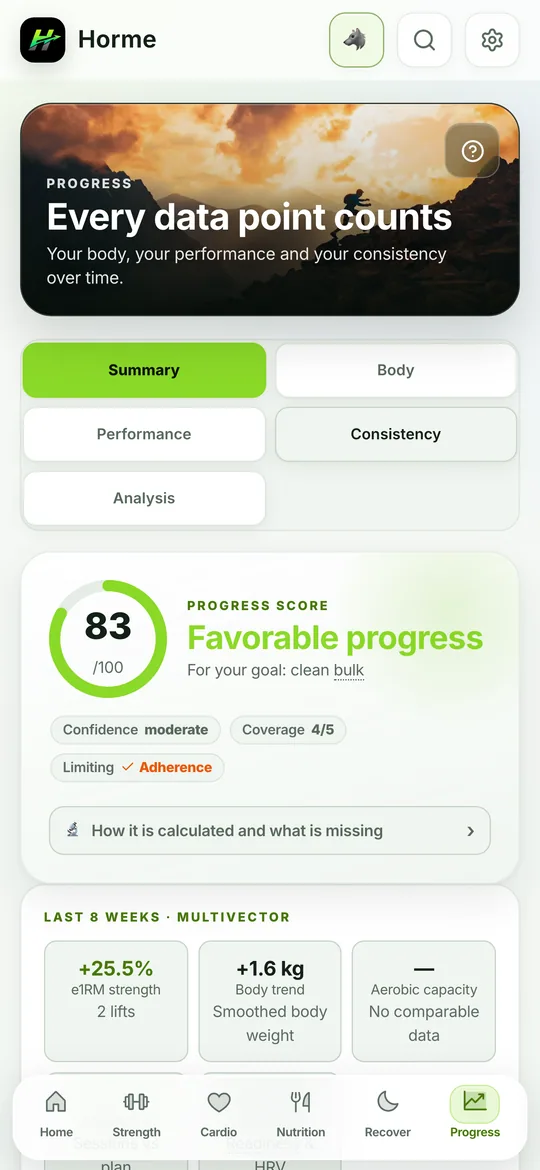
What does not fit on one screen
- Sex-aware routines with an adjustable starting bias — not a "pink" version of the men's one
- Favourites and blocks: save exercises and combinations you repeat
- A full routine editor if you would rather build it yourself
- Volume week anchored to your first training day, not to the calendar Monday
- A seven-step quick tour and 11 per-area mini-tutorials, always available from the "?" on each screen
- A weekly review when the week closes: what you did, what fell short and what to change
What counts is what you log
The programme that starts on Monday is not the one that ends on Sunday: every set you log rewrites it.
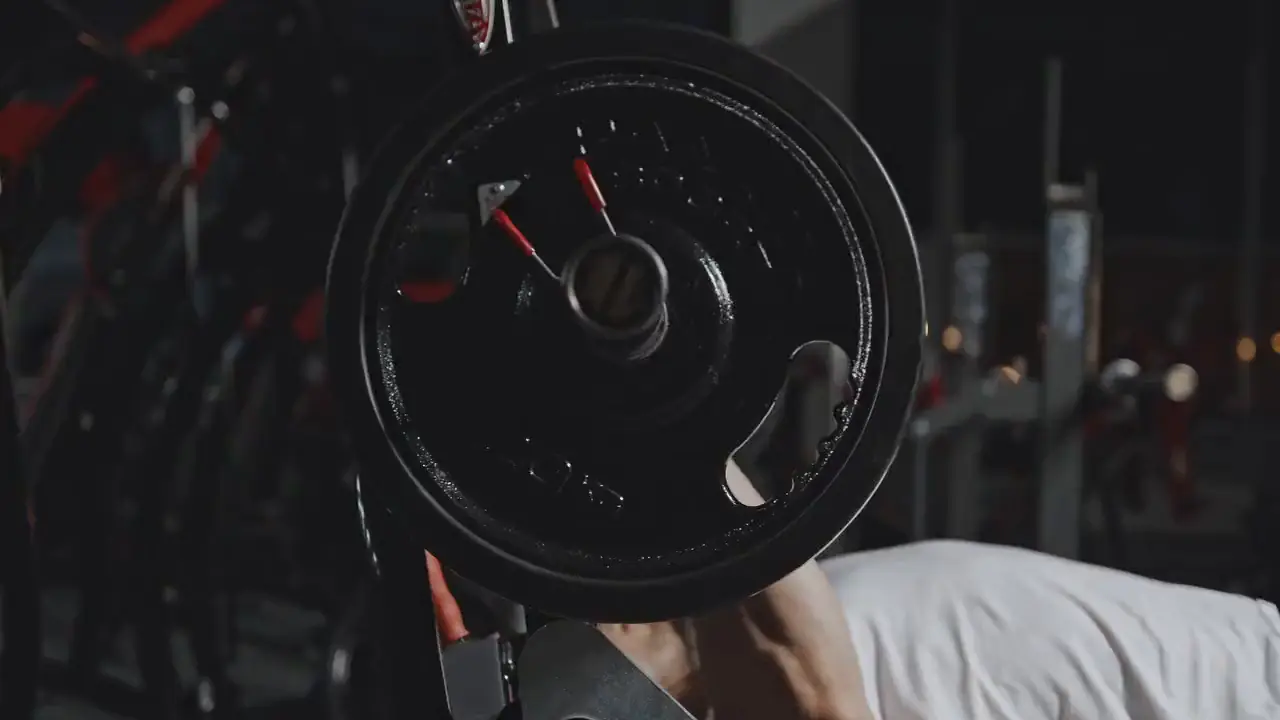
Stimulus is not logged:
it is measured
Every set is weighted by how close you stopped to failure. That is why your weekly volume per muscle reflects what you actually stimulated, not how many times you picked up a bar.
With whatever you have, wherever you are
The plan is built from the equipment you actually have: a full gym, a pair of dumbbells at home, or nothing.

Your first routine, in two minutes
Answer four questions and you get a full programme, deload weeks already in place.
Free. No account required. Works offline from the first launch.